 How-to
7 Rules for Managing Rental Property Maintenance Costs
Last Updated: November 7, 2026
Quick Summary
Managing rental property maintenance costs starts with a realistic baseline: set an annual reserve of roughly 1% of property value, then adjust for age, condition, and major systems. Build the real reserve system by system, dividing each replacement cost by its remaining years, and fund it monthly in a separate account.
- The 1% rule sets annual maintenance at roughly 1% of property value.
- The 50% rule assumes half of monthly rent goes to operating expenses, including maintenance.
- Divide each system's replacement cost by its remaining years, then add a 10% to 20% buffer.
- Treat the monthly reserve contribution as a fixed operating expense moved to a separate account.
- Routine repairs are generally deductible in the year paid; capital improvements are typically depreciated over time.
Table of Contents
- Start With a Baseline: Typical Rental Property Maintenance Costs
- How Much Should You Set Aside for Maintenance on a Rental Property?
- What Drives Your Repair Costs Up or Down
- Build a Rental Property Maintenance Checklist That Prevents Surprises
- Track Every Dollar With a Rental Property Expenses Spreadsheet
- Rental Property Maintenance Expenses, Taxes, and What You Can Deduct
- Put Your Maintenance Budget to Work With Riner Rentals
- Frequently Asked Questions
Start With a Baseline: Typical Rental Property Maintenance Costs
Managing rental property maintenance costs starts with a realistic baseline, not a guess. Most landlords underestimate annual maintenance spending because they budget for visible wear and ignore the slow, expensive replacements coming down the line.
Rental property maintenance is the ongoing work of keeping a unit safe, habitable, and rent-ready, from routine upkeep to emergency repairs. It is not a fixed number. It moves with property age, condition, and local labor costs.
A useful baseline comes from three rules of thumb. Each answers a different question, and none of them works alone.
The 1% Rule, 50% Rule, and Age Rule Compared
The 1% rule sets annual maintenance at roughly 1% of property value. The 50% rule assumes half of monthly rent goes to operating expenses, including maintenance. The age rule scales spending with property age, so older homes get a larger reserve.
| Rule | What It Estimates | Best For | Main Limitation |
|---|---|---|---|
| 1% rule | 1% of property value per year | Quick single-family estimate | Ignores rent level and condition |
| 50% rule | Half of monthly rent to expenses | Fast cash-flow screening | Too broad for itemized budgets |
| Age rule | Higher reserve as property ages | Older homes and multifamily | Needs a condition inspection to be useful |
Use all three as a sanity check. When they disagree, that gap is your signal to inspect the property and build a real budget.
Turning the Rules of Thumb Into a Property-Specific Budget
Rules of thumb screen properties. A budget runs them. The step most landlords skip is converting the three estimates into one number tied to the actual property, then tracking spending against it.
A practical method runs in five steps:
- Run all three rules on the same property. Write down the 1% figure, the 50%-rule figure, and the age-adjusted figure side by side. If they cluster, you have a reasonable range. If they diverge widely, the property has a feature one rule is missing, high rent relative to value, heavy deferred maintenance, or systems near end of life.
- Inspect and list the major systems. Roof, HVAC, water heater, plumbing, electrical, and appliances each get an age and a remaining-life estimate. This is where the age rule becomes concrete instead of abstract.
- Price the replacements. Use local contractor quotes or a recent inspection report. Regional labor and material costs move these numbers more than any rule of thumb can capture.
- Set the annual budget as the higher of the rule-of-thumb range and the system-by-system total. The system-by-system number reflects this property; the rule-of-thumb range reflects the market. Budgeting to the higher of the two protects cash flow without over-reserving on a well-maintained newer unit.
- Divide by 12 and track monthly. The monthly figure becomes a line in your operating budget, reviewed against actual invoices each month.
That five-step method is the difference between a screening number and a budget you can defend to a lender, a partner, or yourself at tax time.
Why the Baseline Moves by Property Type and Age
Broad averages hide the differences that matter most. A 1950s single-family rental with original galvanized plumbing and a 20-year-old roof will outspend a 2015 townhouse on nearly every category, even when both sit in the same market.
Climate and local labor rates set the floor on each job.
A baseline built only on the 1% rule can understate reserves on an older property with deferred maintenance, because the rule keys off value rather than condition.
How Much Should You Set Aside for Maintenance on a Rental Property?
A practical starting point is to set aside an annual maintenance reserve equal to 1% of property value, then adjust for age, condition, and major systems. Landlords with older homes and heavy systems should hold more.
The reserve is not the same as your monthly maintenance allowance. The allowance covers small, recurring costs like filters, minor plumbing, and touch-up work.
A single percentage is only a screening number. The reserve that actually protects you is built system by system, then funded monthly so the cash is there before the failure, not after.
Sizing a Maintenance Reserve for Big-Ticket Replacements
List every major system with its expected remaining life. Then divide the replacement cost by the years left. That annual figure is what you add to the reserve.
- Roof: replacement cost divided by remaining years
- HVAC: replacement cost divided by remaining years
- Water heater: replacement cost divided by remaining years
- Appliances: replacement cost divided by remaining years
Add those numbers together, then add a buffer for unexpected repairs. This method turns a vague worry into a line item you can fund every month.
Here is the worked version of that method.
That total is your annual reserve target. Divide it by 12 to get the monthly funding amount.
Funding the Reserve Without Starving Cash Flow
The reserve only works if it is funded on a schedule. A common pattern is to treat the monthly reserve contribution as a fixed operating expense, the same way you treat the mortgage payment. Move it out of the operating account into a separate reserve account on the first of each month, before any owner distribution.
- Set the monthly contribution from the system-by-system calculation, not from a round number.
- Keep the reserve in a separate account so it is not spent on routine bills.
- Recalculate the remaining-life schedule once a year, after the annual inspection.
- When a major replacement is done, reset that system's remaining life and adjust the monthly contribution.
Watch out: if you fund the reserve only in months with surplus cash, the roof will fail in a month with a vacancy and a plumbing bill, and the reserve will be empty exactly when you need it.
Reconciling the Reserve With the Rules of Thumb
Use the 1% rule and the 50% rule as a cross-check on the system-by-system number, not as a replacement for it.
If the system-by-system number comes out well below 1% of value, confirm that the inspection actually verified remaining life on the roof, HVAC, and water heater.
The reserve is also where the 50% rule earns its keep. If half of monthly rent is going to operating expenses and the reserve contribution pushes total expenses past that line, the property's cash flow is thinner than the screening rule suggested.
What Drives Your Repair Costs Up or Down
Property age and condition drive repair costs more than anything else. An older home with original plumbing and a tired roof will outspend a newer unit on nearly every category.
Property type matters too. A single-family rental spreads costs across one structure. A multifamily property shares a roof and systems across several units, which can lower cost per unit but raise the stakes when a shared system fails.
Deferring small repairs is a common way landlords turn a cheap fix into an emergency bill. A slow leak becomes water damage. For guidance on handling urgent situations without overpaying, see how landlords should handle emergency repairs.
Build a Rental Property Maintenance Checklist That Prevents Surprises
A rental property maintenance checklist turns maintenance from reactive to preventive. By tracking recurring tasks and costs across properties, a preventive checklist can help BGM Realty keep maintenance decisions consistent as a portfolio grows.
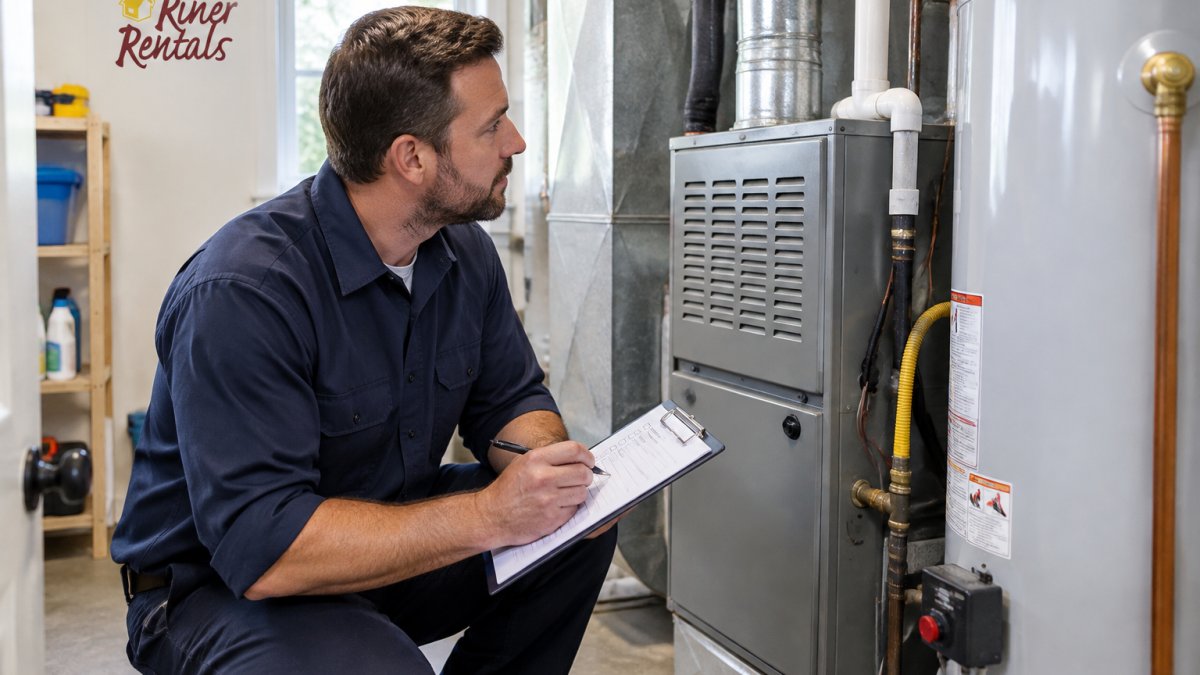
Build your checklist around four categories:
- Routine maintenance: filters, gutters, landscaping, smoke detector checks
- Repairs: leaky faucets, damaged drywall, appliance fixes
- Capital improvements: roof replacement, HVAC upgrade, full appliance swap
- Emergencies: no heat, no water, active leaks, safety hazards
Separating these categories keeps your accounting clean and your response times fast. A ready-made rental property maintenance checklist gives you a starting point you can adapt to each property.
Track Every Dollar With a Rental Property Expenses Spreadsheet
A rental property expenses spreadsheet is the simplest tool for controlling maintenance costs. It shows what you spent, where, and whether spending is trending up. Without it, you are budgeting on memory.
Set up columns for date, property, category, vendor, amount, and whether the cost was a repair or an improvement. Log every invoice the day it arrives. Then review the totals monthly.
- Compare actual spending to your reserve
- Flag any category running above budget
- Spot repeat repairs on the same system
- Track vendor performance and response times
If you are setting this up for the first time, this step-by-step guide to tracking rental property income walks through the structure. Reviewing invoices this way is how you evaluate maintenance spending with real numbers instead of gut feel.
Rental Property Maintenance Expenses, Taxes, and What You Can Deduct
Rental property maintenance expenses taxes treatment depends on one distinction: repairs versus improvements. Capital improvements that add value or extend life are typically depreciated over time (Depreciation & Recapture 4).
The IRS treats these differently, so keep clear records for every job. According to IRS guidance on rental property repairs versus improvements, routine upkeep and replacements are handled differently for tax purposes. When a job is unclear, document what was done and why.
This is where your spreadsheet earns its keep. Clean, categorized records make tax season straightforward and protect you if questions come up later.
Put Your Maintenance Budget to Work With Riner Rentals
A maintenance budget only works if someone acts on it. That means scheduling inspections, responding promptly to maintenance requests, and holding vendors to fair pricing. Most landlords can build the plan.
That is where professional coordination changes the math. Riner Rentals offers 24/7 maintenance request handling, so emergency requests can be reported at any hour.
If you are weighing the handoff, read whether hiring a property manager is worth it, or review property management fees before you commit. Get started with Riner Rentals and turn your maintenance budget into a plan that actually holds.
Frequently Asked Questions
How much should you set aside for maintenance on a rental property?
A common starting point is 1% of the property's value per year, so a $250,000 home gets about $2,500 set aside annually. The 50% rule takes a different view, assuming half of gross rent goes to operating expenses including maintenance. Neither number fits every property. Older homes, multifamily buildings, and properties with deferred repairs need more. Build your own figure from a maintenance checklist and a reserve for major replacements, then adjust as real invoices come in.
What should a rental property maintenance checklist include?
Cover the systems that fail most often: HVAC filters and service, plumbing leaks and water pressure, roof and gutters, appliances, smoke and carbon monoxide detectors, and exterior paint and caulking. Schedule seasonal inspections, typically spring and fall, plus a move-out walkthrough between tenants. A written checklist turns vague worries into scheduled work orders, which is how preventive maintenance stays cheap instead of turning into emergency repairs.
Are rental property maintenance expenses tax deductible?
Routine repairs and maintenance that keep the property in working order are generally deductible in the year you pay them, including labor, materials, and vendor invoices. Capital improvements that add value or extend useful life, like a new roof or a full kitchen remodel, are typically depreciated instead. Keep receipts and a rental property expenses spreadsheet that separates repairs from improvements, and confirm your specific situation with a tax professional.
How can landlords reduce rental property maintenance costs?
Three moves do most of the work. First, run preventive maintenance on a schedule so small issues get caught early. Second, respond promptly to maintenance requests, since a slow fix usually grows into a bigger repair. Third, review invoices and work orders each quarter to spot repeat problems or vendors charging above market labor rates. A property manager with established vendor relationships can often negotiate better pricing than a single landlord calling around.