 How-to
How Can You Manage a Rental Property From Afar?
Last Updated: November 1, 2026
Quick Summary
To manage a rental property from afar, set up a reliable local contact, clear written lease terms, and a dated move-in inspection record before the first tenant arrives. Screen every applicant with the same written criteria, and use online tools for rent payments, maintenance requests, and records.
- Name a local contact who can reach the property quickly and put their number in the lease.
- Complete a full move-in inspection with dated photos and videos to protect your deposit decisions.
- Screen every applicant using the same written criteria and verify income and rental history directly.
- Use one intake channel for maintenance requests and set written spending limits for emergency repairs.
- Hire a property manager if you live far away, own several units, or cannot respond to emergencies quickly.
Table of Contents
- Screen Tenants Thoroughly Without Being on Site
- Write Lease Terms That Cover Remote Realities
- Choose Remote Property Management Software and Online Tools
- Coordinate Maintenance Requests and Emergency Repairs From a Distance
- Handle Inspections, Insurance, and Legal Obligations as an Out-of-State Owner
- Decide When to Hire a Property Manager Instead of Self-Managing
- Frequently Asked Questions
Managing a rental property from afar is hard, but far from impossible.
A good foundation has four parts:
- A reliable local contact: someone who can reach the property quickly
- Clear written policies: rules tenants can read and understand
- A documented move-in record: photos and notes of the unit's condition
A common mistake is treating the first month as a sprint.
Before listing, decide who answers the phone when something goes wrong.
Next, complete a full move-in inspection with dated photos and videos.
Finally, set up your money system before rent arrives.
Watch out: owners who skip the move-in record often lose deposit disputes they could have won.
Screen Tenants Thoroughly Without Being on Site
Screening tenants is your most important protection when you own from a distance. Our guide to screening rental tenants effectively walks through a practical process you can run without meeting applicants in person.
Use a written application for every adult who will live in the unit. Collect identification, employment details, rental history, and permission to run a background and credit check.
Verify each detail directly. Learn how to verify tenant income before you sign a lease so you are not relying on pay stubs alone.
Here is a simple screening checklist to follow for each applicant:
- Completed application signed by every adult occupant
- Government-issued photo ID checked against the application
- Verified income meets the minimum you set in your written screening criteria
Be careful with fair housing rules. Screening criteria must apply equally to everyone and cannot discriminate based on protected characteristics.
The screening process has several checkable steps, summarised below.
| Screening step | What to do | Note |
|---|---|---|
| Written application | Collect it from every adult occupant | Same criteria for all applicants |
| Identity check | Match government photo ID to the application | Confirm before reviewing references |
| Income verification | Check against your written minimum | Minimum set in written criteria |
| Rental history | Call previous landlords directly | Ask about payments and violations |
| Background reports | Review credit and criminal checks | Apply fair housing rules |
| Decision record | Save written notes for each applicant | Supports consistent, defensible choices |
Write Lease Terms That Cover Remote Realities
A strong lease protects you when you are not there to enforce rules in person.
Spell out how and when rent is due, which payment methods you accept, and what late fees apply.
Pay special attention to these remote-specific clauses:
- Emergency contact and response process: who to call and in what order
- Maintenance request method: the portal, email, or text line you use
- Entry and inspection notice: how many days' notice you give, and how you arrange access
Keep the language plain. A tenant should be able to read the lease once and understand it.
Have a licensed attorney in your state review your lease template.
Choose Remote Property Management Software and Online Tools
Software can make remote management far easier. Rent collection, maintenance tickets, and document storage all move online, so you can see the full picture from any device.
Look for a platform that covers the basics well: online rent payments, tenant portals, maintenance request tracking, and expense reporting.
A few questions help narrow your choices:
- Can tenants pay rent and submit requests from a phone?
- Does the system store lease documents and inspection photos in one place?
- Can you export clean financial reports for your accountant?
Many owners pair a management platform with a shared calendar and a cloud storage folder.
For a deeper look at the top options, read our guide to independent software reviews for landlords.
Contact Us Today to Learn More! →
Coordinate Maintenance Requests and Emergency Repairs From a Distance
Maintenance is where remote owners either shine or struggle. The goal is a process that gets problems fixed quickly without you making every call. Setting up a portal and finding a plumber is only the start. A workable plan also needs clear triage rules and spending authority for after-hours emergencies.
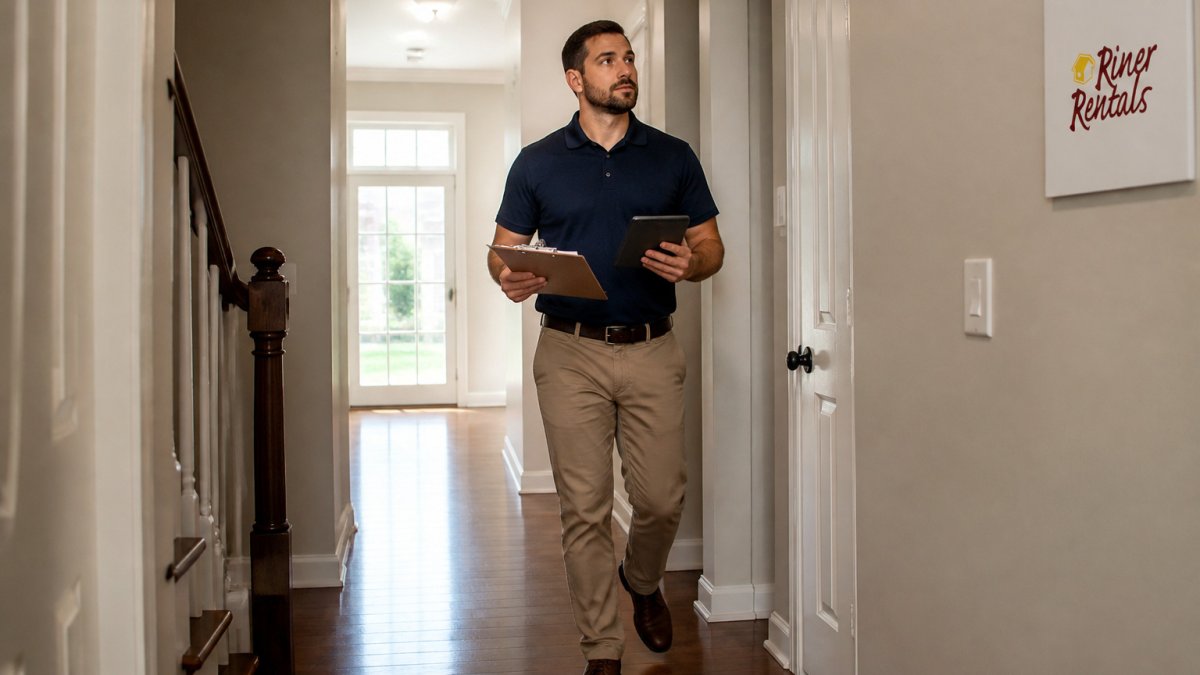
Build a single intake channel with triage rules
Set up one intake channel, such as a tenant portal or dedicated phone line, and require every request to come through it. Ask tenants to describe the issue, attach photos or a short video, and answer one triage question: emergency, urgent, or routine? Publish response-time targets in the lease and welcome packet so expectations are set before anything breaks.
A workable triage standard:
- Emergency: immediate risk to safety or major property damage (gas smell, active flooding, no heat in freezing weather, sewage backup, fire damage). Responder acts now.
- Urgent: habitability or security issue that can wait until the next business day (no hot water, broken exterior lock, refrigerator failure).
- Routine: cosmetic or non-habitability items (dripping faucet, scuffed paint, slow drain). Schedule within a normal service window.
Define emergency authority and spending limits in writing
This piece is essential for remote owners. Follow our step-by-step guide to handling emergency rental property repairs to set this up correctly.
Document the authorization in three places: the lease, the vendor file, and a one-page emergency card your local contact keeps on their phone. The card should list the property address, utility account numbers, shut-off locations, your backup phone number, and the spending tiers.
Pre-qualify backup contractors, not just primary ones
Gather two or three licensed, insured contractors for each trade: plumbing, electrical, HVAC, roofing, and general repairs. Confirm rates, after-hours availability, insurance certificates, and whether they will take direction from your local contact. Then confirm a backup for each trade. Establishing these professional relationships early creates a reliable framework for managing home repairs long distance when urgent issues inevitably arise.
Keep a vendor file with license numbers, insurance expiration dates, and agreed rates. Review it twice a year, because insurance lapses and rate changes are easy to miss from a distance.
Run a repair log that pays for itself
Log every request with date, description, vendor, authorization tier, invoice, and outcome. Over a year, the log shows which systems fail most often, which vendors respond fastest, and where preventive maintenance will save money. It also becomes your evidence if a tenant disputes a repair or a charge.
Handle Inspections, Insurance, and Legal Obligations as an Out-of-State Owner
Owning property in another state brings extra responsibilities. You must follow the landlord laws, tax rules, and registration requirements of the state and locality where the property sits, even if you live elsewhere. Most guides treat this as a vague reminder. This section turns it into a working system, because the out-of-state owner who gets this wrong faces the costliest surprises.
Run a remote inspection calendar with documented evidence
Plan inspections on a fixed schedule rather than when something feels wrong. A common pattern is a full professional inspection once or twice a year, a walkthrough after each move-out, and a quick tenant-reported condition check at renewal.
Keep move-in and move-out records in the same format so they can be compared side by side. This is the evidence that decides deposit disputes and proves whether a repair was actually done.
Confirm insurance for an absentee owner
A standard homeowners policy often does not cover a rental property, and a landlord policy may exclude or limit coverage during vacancy. Ask your agent specifically about landlord liability coverage, loss-of-rent protection, and vacancy exclusions, and confirm the policy reflects the property's actual use. Verify that your local contact and every vendor carry their own liability insurance, and keep current certificates on file.
Build a jurisdiction checklist before you need it
Rules vary widely by state and locality. Rather than guess, build a checklist and confirm each item with the state or local agency, your attorney, or your accountant:
- Rental registration or licensing requirements, and any local business license
- Security-deposit limits and the deadline to return deposits
- Notice requirements for entry, inspections, and ending a tenancy
State and local government websites publish these rules, and they change. Reconfirm the checklist annually and whenever a tenancy turns over.
Track tax obligations with clean records
Rental income is generally reportable, and ordinary expenses such as repairs, insurance, and management fees are usually deductible (Topic no. 414, Rental income and expenses). The IRS publishes guidance on rental income and expenses (Topic no. 414, Rental income and expenses). Keep receipts and the repair log in one folder so your tax preparer can work from a clean record, and confirm with a qualified tax professional how your state treats nonresident rental income.
Decide When to Hire a Property Manager Instead of Self-Managing
Self-managing from a distance works for some owners, but not all. Read whether professional emergency repair coordination is worth it before deciding how much of the work to hand off.
Self-managing makes sense when you live nearby, own one or two properties, and can respond to tenants quickly. It also works if you enjoy the administrative work and have reliable local vendors.
Hiring a property manager often makes sense when you live far away, own several units, or struggle to respond to emergencies.
Use this simple test before deciding:
- Can someone reliable respond to an emergency within two hours?
- Do you have time to screen, lease, and manage maintenance each month?
- Would a single bad tenancy cost you more than a year of management fees?
If you answer no to the first two questions or yes to the third, a professional manager deserves serious consideration.
Riner Rentals provides property management for owners in Harrisonburg and Rockingham County.
Frequently Asked Questions
How do you manage a rental property from afar?
Start with a written operating plan: a screened tenant, a lease that spells out how repairs, rent and communication work, a reliable local contact for emergencies, and an online system for rent collection and records. Schedule a recurring check-in each month to review rent status, open maintenance tickets and expenses. Use photos and periodic inspections, with proper notice under your state's rules, to confirm the property is being kept up. Riner Rentals can handle these tasks for owners who prefer not to run them directly. Check riner rentals' website for current service details or to request a quote.
Can you manage a rental property remotely without a property manager?
Yes, many out-of-state owners self-manage successfully, but it requires a dependable local contact, a repair vendor you trust, and consistent systems. Your local contact should be able to access the unit, meet a plumber or electrician, and report back quickly. Without that person, a late-night emergency can become a costly delay. Owners who are comfortable with the workload, live within a reasonable distance of the property, and have time for tenant questions often find self-management workable.
When should a long-distance landlord hire a property manager?
Consider hiring a property manager when you own several units, when you live far enough away that a local visit is hard to arrange, or when tenant turnover, emergency response and rent follow-up take more time than you have. Compare the monthly management fee against the hours you would spend and the cost of a mistake, such as a missed repair or a poorly screened tenant. Riner Rentals provides property management for owners in the Harrisonburg and Rockingham County area. Pricing depends on the property and services selected, so request a quote for current figures.
How often should a landlord inspect a rental property?
Many landlords inspect once a year, plus a move-in and move-out inspection for every lease. Remote owners often add a quick check after any major repair or when a tenant reports a problem. Inspections must follow the notice rules in your state and lease, and they should be documented with dated photos and a written checklist. Keeping those records helps with security deposit disputes and insurance claims.
Ready to stop managing every detail from a distance? Apply online with Riner Rentals and let a local team take care of the daily work while you keep control of your investment.